


SAIC 2026
Partner with South Africa — where ideas, people, and opportunity come together to shape a lasting future. At the SA Investment Conference 2026, you can help build legacies, empower communities, and open doors that matter — not just today, but for generations to come.
Since its launch in 2018, the South Africa Investment Conference (SAIC) has been more than an annual convening, it’s a turning point in how South Africa and global partners think about growth, partnership, and impact. Born from a shared promise to open every shut door and turn our nation’s potential into expanded economic opportunity, SAIC has brought together leaders from business, government, and civil society with one shared aim: to translate a nation in progress into real capital, real jobs, and real progress.
The largest single-day investment mobilisation in South Africa's democratic history
The capital committed during this year's summit represents more than just numbers — it's a strategic vote of confidence in the engines of our economy. While Energy leads the charge at 35%, our allocation reflects a balanced ecosystem, powering high-tech ICT solutions and modern Agriculture with equal intent.
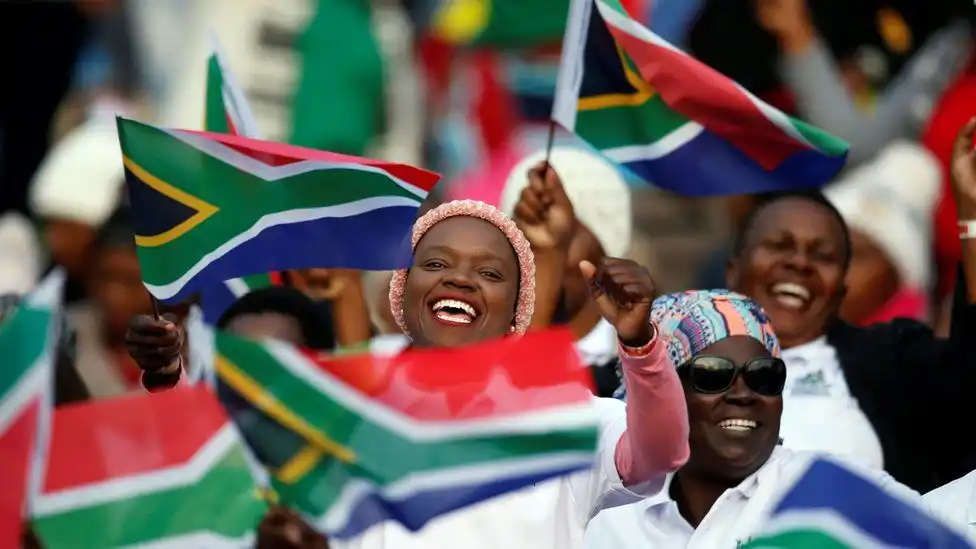
South Africa is home to over 60 million people — a diverse and resilient population shaping one of the most sophisticated economies on the African continent. From globally recognised financial institutions to advanced manufacturing hubs, from world-class universities to major logistics corridors connecting oceans and markets, the country offers a powerful platform for expansion.
South Africa is home to a large and evolving consumer economy, shaped by more than 43 million adults who actively participate in daily economic life. A growing middle market of credit-active consumers is driving retail and financial services expansion, while millions are embracing digital platforms as online commerce gains momentum. At the same time, the country's informal economy — supporting close to 8 million income earners — highlights a culture of enterprise and adaptability that continues to power grassroots growth.
South Africa’s investment landscape is defined by diversity and momentum.
In renewable energy, new projects are reshaping the power system while positioning the country as a future exporter of green hydrogen. In mining, critical minerals are supporting global energy transitions. In agriculture, advanced processing and export growth are unlocking value across rural economies. Each sector tells the same story: opportunity is not static — it is being built.

South Africa is rapidly expanding its digital backbone — from submarine cable networks to hyperscale data centres. Investments in broadband, cloud, and smart-city infrastructure are unlocking new economic corridors and positioning the country as Africa's premier digital gateway.

With abundant solar and wind resources, South Africa leads the continent's green energy transition. REIPPP projects and green hydrogen initiatives are drawing significant private capital, accelerating the shift away from coal toward a low-carbon, energy-secure economy.

Home to BMW, Toyota, Ford and Mercedes-Benz assembly plants, South Africa's automotive sector is transitioning to EV production. World-class manufacturing capabilities and preferential trade agreements make it the continent's most competitive industrial production base.

South Africa's agri-food sector achieved record export highs in 2025. From wine and citrus to poultry and packaged foods, agro-processing presents compelling investment opportunities tied to growing African consumer markets and duty-free access into the EU and US.

As Africa's busiest logistics hub, South Africa's ports, rail corridors and OR Tambo air freight routes connect the continent to global markets. Ongoing Transnet reforms and corridor upgrades are unlocking significant private investment potential in multimodal logistics networks.

Johannesburg is Africa's financial capital, home to the continent's most sophisticated banking, insurance and capital markets ecosystem. A booming fintech sector backed by progressive regulation is driving financial inclusion across sub-Saharan Africa at unprecedented scale.
Financial markets have responded: bond yields declined and the Rand strengthened. Inflation is at multi-year lows (3.2% avg. in 2025), allowing the central bank to reduce rates. GDP growth has improved, fiscal management is tightening, and these trends underpinned S&P's historic rating upgrade. The IMF notes that in 2025 "inflation and interest rates fell, government bond yields narrowed, and both the stock market and Rand strengthened" — providing more certainty for investors on returns and costs.
South Africa offers structured support, clear incentives and dedicated facilitation services designed to help projects succeed. From special economic zones and financing instruments to investment promotion teams and streamlined regulatory processes, we’ve developed a coordinated approach to attracting and sustaining long-term capital.
Trade agreements across Africa and with global partners extend the reach of investments far beyond national borders. You do not stand alone, become part of a network committed to growth, innovation and shared prosperity.
South Africa provides a structured “one-stop” support system for investors.
The national investment promotion agency under DTIC offers facilitation services, regulatory guidance, and coordination of incentives. Investors can register projects via the EOSS portal (ECDCs) and receive dedicated aftercare services.
investsa.gov.zaEOSS portalDTICMCEP manufacturing programme, R&D tax credits, IDC industrial financing and NEF empowerment funding. Chapter 12I allows tax deductions for capital investment; Section 12L covers energy efficiency improvements. 13 Special Economic Zones across all provinces provide tax breaks and customs benefits.
12I tax allowanceSection 12LR&D creditsIDC13 SEZsMember of SACU, SADC and AfCFTA — 0% tariffs to 54 African markets. Trade agreements with the EU, UK and Mercosur give access to billions of consumers. Major Atlantic and Indian Ocean port links connect to global markets and landlocked neighbours.
AfCFTASADCEU-SA EPAUK-SAAGOAEnglish common law system with strong IP protection and an independent judiciary. The government has reduced regulatory hurdles — digital tax filings, streamlined visas, and simplified business registration. South Africa exited the FATF grey-list on 24 October 2025.
Common lawIP protectionDigital visasFATF clearedDedicated InvestSA offices, sector desks, and foreign liaison officers at South African embassies. The DTIC's Investment Roadmap and Annual Investment Conference provide direct forums to engage with officials. Provincial centres — WESGRO, ECDC — offer on-the-ground support and IDC project managers assist with joint ventures.
InvestSA officesWESGROECDCIDCConnect with InvestSA, register your project, download the incentives guide, or join an upcoming investor webinar.
South Africa’s reform journey is evident. From it’s energy projects coming online, from it’s modernised ports, and in new digital systems that simplify how investors engage with public sector. The transformation of the electricity sector is unlocking private generation and accelerating the transition to cleaner energy sources. Logistics reforms are improving efficiency across rail and port infrastructure, helping businesses move goods faster and at lower cost.
At the same time, new visa pathways and digital government services are opening the country to global talent and simplifying the investment experience.
These changes reflect a broader shift in governance: a commitment to transparency, partnership with the private sector, and long-term economic resilience.
New remote-work and trusted-employer visa schemes attract global talent. The prototype MyMzansi digital government portal streamlines investor services and public sector engagement.
South Africa exited the FATF grey-list in October 2025. The Reserve Bank set a new 3% inflation target and began cutting interest rates to 6.75% in Nov 2025 given subdued prices.
Water-sector reforms created the National Water Resources Infrastructure Agency. Housing policies are being updated to unlock greater private sector participation in development.
NERSA approved new power trading rules. An additional 365 MW of renewables came online in Q4 2025, with the R11 billion Durban port concession and +4.4% Transnet rail growth following.
Government launches Operation Vulindlela reform programme. Eskom unbundling begins as a national priority.
Private power generation threshold raised to 100 MW. Emergency IPP procurement accelerated to address grid crisis.
SARB resets inflation target to 3% ±1pp. FATF grey-list exit process begins with AML/CFT reforms strengthened.
National Rail Bill drafted. Transnet PPP framework approved. Private sector rail access policy advanced for implementation.
South Africa removed from FATF grey-list after strengthening anti-money laundering standards. Major confidence boost for investors.
Market Operator licence approved for National Transmission Company. Competitive wholesale electricity trading rules published. 365 MW renewables added Q4 2025.
First credit rating upgrade in 20 years. S&P cites stronger growth prospects, fiscal reform and improved structural conditions.
25-year private concession for Durban Pier 2 unlocks R11 billion investment. Digital visa schemes and MyMzansi e-government portal launched.
South Africa offers structured investment vehicles across six high-growth sectors — each backed by government masterplans, dedicated incentives, and sector-specific support through InvestSA.
Visual summaries of South Africa's key economic data, reform momentum and sector performance — designed to orient investors quickly and clearly.
Headline placeholder — copy to be supplied
Headline placeholder — copy to be supplied
Headline placeholder — copy to be supplied